
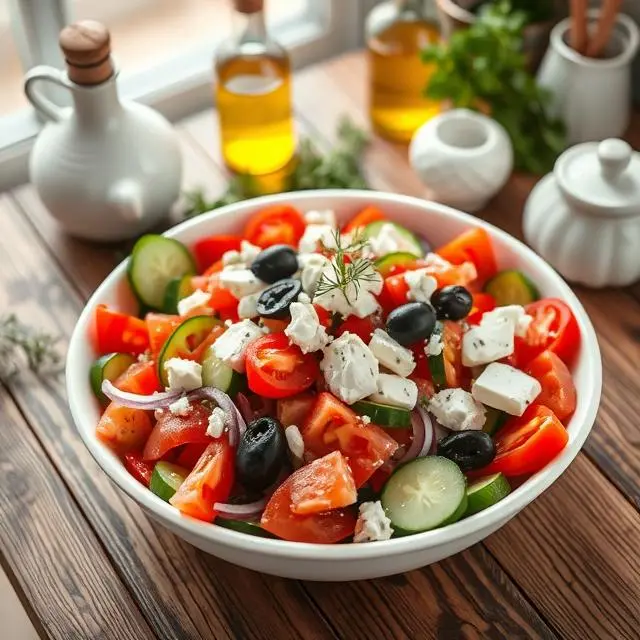
Greek salad, known as Horiatiki in its homeland, is a true icon of Mediterranean cuisine. Vibrant, fresh, and full of flavor, it combines juicy vegetables, creamy feta cheese, and rich olives into a perfect balance of taste, texture, and color. Simple yet elegant, this salad captures the sunny essence of Greece in every bite.
Making this classic dish at home is like taking a small culinary journey to the Greek islands. Each mouthful tells the story of a centuries-old tradition, turning basic ingredients into a refined, satisfying experience.
The History Behind Greek Salad
Greek salad isn’t just a mix of vegetables—it’s a tradition. Authentic Horiatiki does not include lettuce, which surprises many who are familiar with Westernized versions.
This salad originated as a way for Greek farmers to enjoy fresh produce from their gardens. Tomatoes, cucumbers, local cheese, and olives were combined into a refreshing, nourishing dish. This approach reflects the Greek philosophy of keeping things simple while emphasizing the quality and freshness of each ingredient.
Today, Greek salad is famous worldwide, but understanding its roots allows you to make a version that respects tradition while suiting your personal tastes.
Essential Ingredients for an Authentic Greek Salad
| Ingredient | Amount | Notes |
|---|---|---|
| Fresh tomatoes | 4 large | Ripe, juicy, cut into wedges |
| Cucumber | 1 | Peeled, sliced thickly |
| Red onion | 1 | Thinly sliced |
| Green bell pepper | 1 | Cut into strips |
| Kalamata olives | 100 g | With pits for traditional flavor |
| Feta cheese | 200 g | Whole block, not crumbled |
| Extra virgin olive oil | 4 tbsp | Fruity and high quality |
| Red wine vinegar | 1 tbsp | Optional: white vinegar works too |
| Dried oregano | 1 tsp | Preferably Greek |
Choosing the Perfect Tomatoes
Tomatoes are the heart of a Greek salad. Look for firm, ripe tomatoes that offer a perfect balance of sweetness and juiciness.
- Heirloom tomatoes: add rich, complex flavors.
- Vine tomatoes: offer consistent ripeness and structure.
- Cherry tomatoes: optional, for bursts of color and concentrated flavor.
Cucumbers: Freshness and Crunch
Cucumber choice affects the salad’s texture.
- English cucumbers: fewer seeds, thin skin, uniform slices.
- Garden cucumbers: more flavor, slightly firmer texture. Consider peeling partially in strips for visual interest while retaining nutrients.
Feta Cheese: The Star of the Salad
Feta is the defining element of Greek salad.
- Authentic Greek feta (PDO): creamy with a distinct salty taste.
- Aged feta: firmer texture and bolder flavor.
- Local substitutes: use brined white cheeses with similar saltiness and creaminess if Greek feta isn’t available.
Olives: The Mediterranean Touch
Olives add depth and authenticity.
- Kalamata olives: rich, fruity, and slightly tangy.
- Green olives: firmer and more acidic, offering variety.
- Pitted or with pits: pitted for convenience, whole olives for stronger flavor retention.
Step-by-Step Preparation
Preparing the Vegetables
- Wash all vegetables thoroughly under cold water.
- Dry completely to avoid watering down the dressing.
- Set up a clean cutting area with a sharp knife and stable board.
Cutting Techniques
- Tomatoes: cut into wedges or large irregular pieces to maintain structure and avoid excess juice.
- Cucumbers: thick slices or half-moons for crispness.
- Red onions: thin slices, soak in ice water 15 minutes to reduce sharpness.
- Peppers: thin strips, remove seeds and white ribs to avoid bitterness.
Assembling the Salad
- Layer the vegetables in a large bowl, highlighting the vibrant colors.
- Evenly scatter olives.
- Crumble the feta on top in uneven chunks for flavor variety and visual appeal.
Traditional Greek Dressing
Ingredients
- 4 tbsp extra virgin olive oil
- 1 tbsp red wine vinegar
- 1 tsp dried oregano
- Salt and black pepper to taste
- Optional: crushed garlic or lemon juice
Preparation
- Mix vinegar and salt in a small bowl.
- Gradually whisk in olive oil to create a light emulsion.
- Add oregano, pepper, and optional garlic last.
- Taste and adjust: classic ratio is roughly 3 parts oil to 1 part vinegar.
Creative Variations
Adding Protein
- Grilled lamb: thinly sliced, cooled before adding.
- Marinated chicken: olive oil, lemon, and oregano marinade.
- Chickpeas: lightly mashed for creaminess and plant-based protein.
Seasonal Twists
- Spring: fresh fava beans, marinated artichokes, fresh herbs like dill and parsley.
- Summer: grilled zucchini, eggplant, and colorful cherry tomatoes.
- Autumn: figs, nuts, or partial substitution of feta with salted ricotta.
Serving Tips
- Serve at room temperature for maximum flavor.
- Add dressing just before serving to maintain vegetable crunch.
- Mix gently, lifting ingredients rather than stirring aggressively.
Traditional Accompaniments
- Warm pita bread
- Dolmas (stuffed grape leaves)
- Homemade hummus
Storage and Leftovers
- Store in an airtight container in the fridge.
- Keep dressing separate until serving.
- Feta: in brine or lightly covered with olive oil.
- Use leftovers in sandwiches, pasta salads, or blended into a Mediterranean yogurt soup.
Nutritional Benefits
- Packed with vitamins, minerals, and antioxidants.
- Tomatoes: rich in lycopene and vitamin C.
- Olive oil: heart-healthy fats and enhances absorption of fat-soluble vitamins.
- Feta: provides protein and calcium for strong bones and muscle recovery.
Dietary Adaptations
- Light version: reduce feta and oil, add extra herbs and lemon juice.
- Vegan: substitute tofu marinated in olive brine and herbs for feta.
- Low sodium: use desalinated feta and fewer olives, enhance flavor with herbs and lemon.
Common Mistakes to Avoid
- Adding dressing too early can make the salad watery.
- Cutting vegetables too small leads to mushy texture; too large makes eating difficult.
- Using under-ripe or overripe produce affects flavor balance.
Fixes:
- Drain excess liquid and add fresh vegetables if necessary.
- Adjust seasoning: too acidic? add oil and feta. Too oily? add lemon juice and herbs.
- Presentation: layer by color, add fresh herbs, serve in individual bowls.
Pairings and Menus
- Dry white wines like Assyrtiko or Sauvignon Blanc complement acidity.
- Rosé works well with the salty feta.
- Non-alcoholic: cucumber and mint-infused water.
- Complete Mediterranean menu: serve alongside spanakopita, taramasalata, keftedes, or grilled fish.
Conclusion
The perfect Greek salad is a blend of tradition, quality ingredients, and careful preparation. It turns simple vegetables and cheese into a memorable dish that transports you straight to Greece. Selecting fresh ingredients, mastering cutting techniques, and timing the dressing are keys to success.
The salad’s charm lies in its simplicity, concealing a balanced complexity of flavors. Respect traditional methods while adapting to your taste to create an authentic, delicious dish.
Start with high-quality vegetables and feta, experiment with olives and herbs, and enjoy your personal twist on this timeless Mediterranean classic!
Ready to make your own authentic Greek salad? Start with high-quality ingredients from your local market, and feel free to experiment with different olives and cheeses to find your favorite combination. Share your creations and tips in the comments – we’d love to see your creative variations of this timeless Mediterranean recipe!
FAQ –
Q: Can Greek salad be prepared in advance?
A: Yes, but add feta and dressing just before serving to avoid soggy vegetables.
Q: What makes feta different from other cheeses?
A: Authentic Greek feta is PDO, made mainly from sheep’s milk (sometimes blended with goat’s milk). It is salty, tangy, and creamy.
Q: How to select the best olives?
A: Choose Kalamata olives: large, dark, and rich in flavor.