
Have you ever craved something that combines the comfort of a pancake with the satisfying heartiness of a complete meal? Enter okonomiyaki—Japan’s beloved savory creation that has been winning over food enthusiasts across the globe. This isn’t your typical breakfast fare. Instead, imagine layers of tender cabbage bound together in a golden, crispy exterior, topped with an array of mouthwatering sauces and ingredients that dance on your taste buds. The name itself means “grilled as you like it,” which perfectly captures the spirit of this versatile dish that invites you to become the chef of your own culinary adventure.
What Makes Okonomiyaki Different from Regular Pancakes?
Unlike the sweet breakfast pancakes you might be accustomed to, okonomiyaki represents an entirely different culinary tradition. Moreover, this savory Japanese creation combines shredded cabbage with a delicate batter, forming a hearty pancake that serves as a complete meal rather than a morning treat.
The beauty of this cabbage pancake lies in its versatility. In fact, you control every element—from the protein you add to the toppings you drizzle on top. Therefore, think of it as a canvas where your culinary creativity meets traditional Japanese flavors.
The Rich History Behind Your Favorite Cabbage Pancake
Before diving into your kitchen, let’s appreciate where this magnificent dish originated. Specifically, okonomiyaki emerged during challenging times in Japan’s history, particularly after World War II when ingredients were scarce. Consequently, resourceful home cooks stretched limited supplies by creating filling meals from affordable vegetables like cabbage, combined with whatever proteins they could find.
Furthermore, the dish evolved differently across regions. For example, Osaka-style okonomiyaki mixes all ingredients together before cooking, creating a cohesive, fluffy pancake. Meanwhile, Hiroshima’s version layers ingredients like a savory crepe, resulting in a taller, more structured creation. As a result, both styles have passionate devotees who’ll defend their preferred method with genuine enthusiasm.
Essential Ingredients for Your Perfect Okonomiyaki
Creating an authentic pancake au chou requires gathering specific components. However, don’t worry—most ingredients are surprisingly accessible, even outside Japan.
For the Base:
First and foremost, your foundation starts with all-purpose flour mixed with dashi (Japanese soup stock) or water. This creates a lighter batter than traditional pancake recipes. Additionally, you’ll need eggs to bind everything together and create that satisfying texture when you bite through the crispy exterior into the tender interior.
The star ingredient? Cabbage, finely shredded into delicate ribbons. Indeed, you’ll need more than you think—roughly three to four cups per two servings. Ultimately, the cabbage provides moisture, sweetness, and that characteristic texture that defines okonomiyaki.
Proteins and Mix-ins:
Here’s where “grilled as you like it” truly applies. Traditionally, options include thinly sliced pork belly, which crisps beautifully on the griddle. Alternatively, seafood lovers often choose shrimp, squid, or octopus. On the other hand, vegetarians can skip animal proteins entirely or incorporate mushrooms for umami depth.
Furthermore, tenkasu (tempura scraps) add unexpected crunch throughout your pancake. Similarly, pickled red ginger provides sharp, tangy bursts that cut through richness. In addition, green onions contribute freshness and mild bite.
The Finishing Touches:
Your okonomiyaki reaches its final form through distinctive toppings. Specifically, okonomiyaki sauce—a sweet, tangy condiment similar to Worcestershire sauce but thicker and more complex—gets drizzled generously across the surface. Meanwhile, Japanese mayonnaise, richer and slightly sweeter than Western versions, creates those iconic white zigzag patterns.
Finally, aonori (dried seaweed flakes) and katsuobushi (bonito flakes) complete the experience. Watch the katsuobushi dance from the pancake’s residual heat—it’s mesmerizing and signals you’ve created something authentic.
Step-by-Step Guide to Making Okonomiyaki at Home
Ready to transform your kitchen into an Osaka street food stall? Follow these steps for pancake au chou perfection.
Preparing Your Batter
To begin, start by whisking together one cup of flour with three-quarters cup of dashi or water. The consistency should resemble heavy cream—thick enough to coat a spoon but still pourable. Next, crack in two eggs and whisk until smooth. Additionally, some recipes call for grated yamaimo (mountain yam), which creates an incredibly fluffy texture, though it’s optional if you can’t source it.
After mixing, let your batter rest for fifteen minutes. This brief pause allows the flour to hydrate fully, resulting in a more cohesive pancake that won’t fall apart when you flip it.
Assembling Your Mix
In a large bowl, combine your shredded cabbage with the batter. Importantly, use just enough batter to coat the cabbage—you want a vegetable pancake held together by batter, not a flour pancake with cabbage mixed in. This distinction matters tremendously for texture.
Then, fold in your chosen mix-ins: the tenkasu, pickled ginger, green onions, and any additional ingredients that excite you. Remember, this dish celebrates personal preference.
Mastering the Cooking Technique
First, heat your largest skillet or griddle over medium heat. Then, add a generous amount of oil—okonomiyaki needs fat to develop that golden crust. Next, pour your cabbage mixture onto the hot surface, shaping it into a circle about one inch thick. However, don’t compress it; you want air pockets for fluffiness.
If using pork belly, lay the slices across the top surface now. As the pancake cooks from below, the meat will adhere and cook from the heat rising through the batter.
Subsequently, cook undisturbed for five to six minutes. You’ll know it’s ready to flip when the edges turn golden and the surface begins setting. Here’s where courage comes in—slide your spatula underneath, take a breath, and flip decisively. In fact, a second spatula helps if you’re nervous about the flip.
Afterward, cook the second side for another five to six minutes until deeply browned and cooked through. At this point, the pork should be crispy, and the interior should feel firm when gently pressed.
Perfecting Your Toppings
Once cooked, transfer your masterpiece to a plate. Working quickly while it’s hot, paint okonomiyaki sauce across the entire surface. Indeed, don’t be shy—the sauce is fundamental to the flavor profile. Then, drizzle Japanese mayonnaise in zigzag patterns, then shower with aonori and katsuobushi.
Common Mistakes to Avoid
Even experienced cooks encounter challenges with this cabbage pancake. Therefore, let’s address the most frequent issues.
Too Much Batter: This mistake creates a dense, doughy pancake rather than the light, cabbage-forward dish you’re seeking. Instead, the cabbage should dominate, with batter acting as architectural support.
Insufficient Heat: Similarly, cooking over low heat results in a pancake that steams rather than sears. Consequently, you need that golden crust for proper flavor development and textural contrast.
Impatience When Flipping: Furthermore, flipping too early causes your okonomiyaki to break apart. Therefore, wait for clear visual cues—golden edges and a set surface—before attempting the flip.
Compressing the Pancake: Additionally, resist the urge to press down with your spatula. You’re not making a smash burger. Instead, okonomiyaki should maintain its fluffy height.
Creative Variations to Try
Once you’ve mastered the basic pancake au chou, exploration beckons. Here are some exciting options to consider.
Seafood Extravaganza: For instance, combine shrimp, squid, and scallops for an oceanic version that rivals any coastal Japanese restaurant.
Cheese Lover’s Dream: Alternatively, fold shredded mozzarella or cheddar into your batter. As a result, the melted cheese creates incredible stretch and richness.
Kimchi Fusion: Moreover, incorporate chopped kimchi for a Korean-Japanese fusion that adds spicy, fermented complexity.
Yakisoba Hybrid: Finally, create Hiroshima-style by layering cooked yakisoba noodles into your pancake for extra substance and texture variation.
Why This Dish Deserves a Place in Your Regular Rotation
Beyond its delicious flavor, okonomiyaki offers practical benefits for modern home cooking. Firstly, it’s remarkably economical—cabbage costs little, and you can adjust proteins based on budget. Additionally, the dish also functions as an excellent vehicle for using up refrigerator odds and ends.
From a nutritional standpoint, you’re consuming substantial vegetables with moderate protein and carbohydrates. Moreover, it’s filling without being heavy, especially compared to many comfort foods.
Perhaps most importantly, making okonomiyaki becomes an interactive experience. In Japan, many restaurants provide griddles at your table, turning dinner into entertainment. Therefore, recreate this at home by cooking at the table on a portable burner, allowing family or friends to participate in the creation process.
Bringing It All Together
Mastering okonomiyaki connects you to Japanese culinary tradition while offering endless opportunities for personalization. Indeed, this isn’t just another recipe to add to your collection—it’s a gateway into understanding how simple ingredients, thoughtfully combined, create something greater than the sum of their parts.
Admittedly, your first attempt might not look Instagram-perfect. The flip might feel scary. You might question whether you’ve added enough batter or too much cabbage. However, that’s completely natural. What matters is that you’re engaging with a cooking technique that has brought joy to countless people across generations.
The next time you crave something savory, substantial, and deeply satisfying, remember that incredible cabbage pancake waiting to be created in your kitchen. Simply grab that cabbage, whisk that batter, and heat that griddle.
Now it’s your turn to create magic. What ingredients will you choose for your personalized okonomiyaki? Will you stay traditional with pork belly, or venture into creative territory with unexpected additions? Share your experience—I’d genuinely love to hear how your first (or fiftieth) pancake au chou turns out. After all, the beauty of this dish is that there’s no wrong answer, only your perfect version waiting to be discovered.
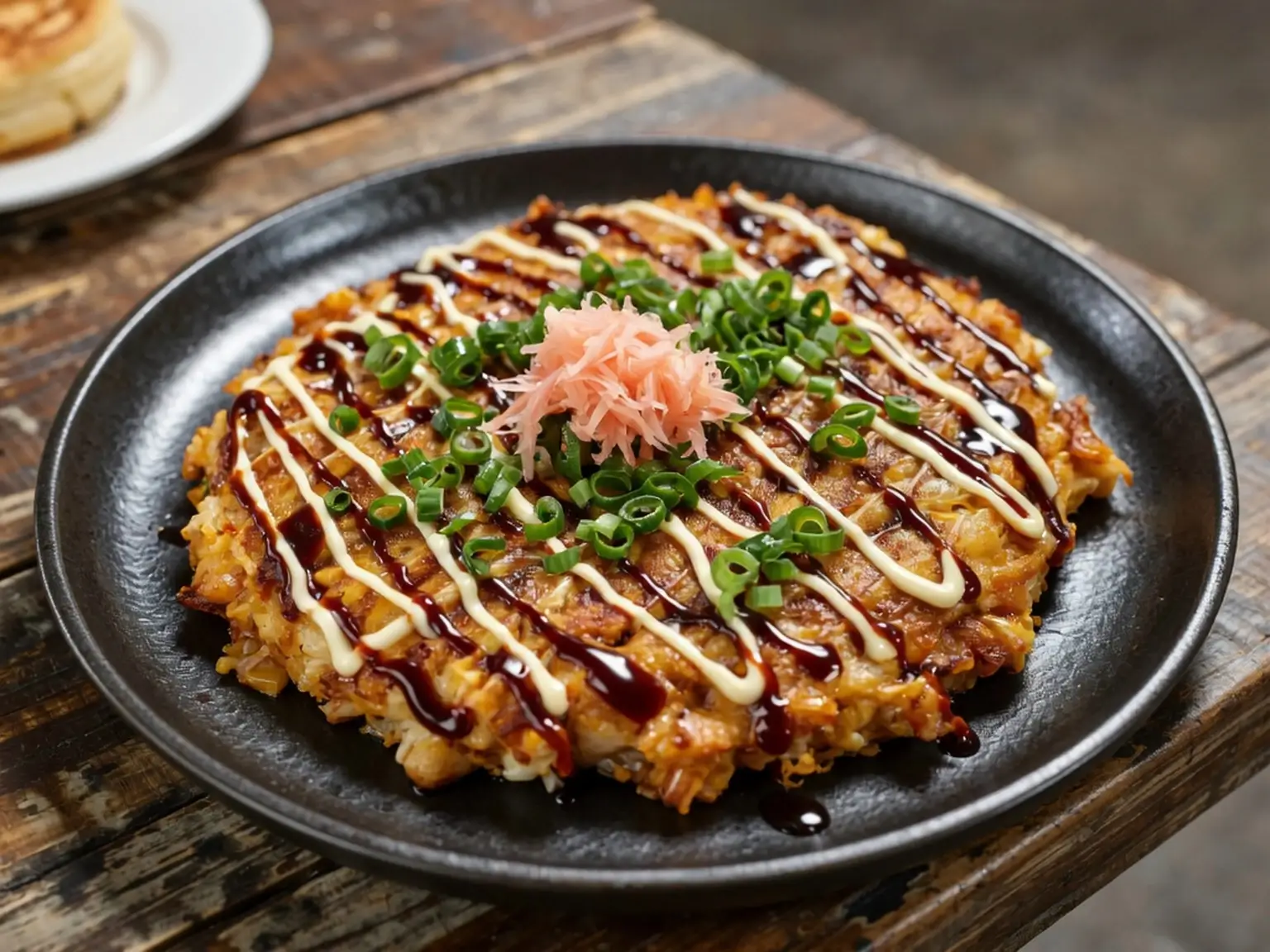
Okonomiyaki – Japanese Savory Cabbage Pancake
Ingredients
Method
- In a large bowl, whisk together the flour, dashi (or water), and a pinch of salt until smooth. Add the eggs and whisk again until the mixture is fully combined. The batter should have the consistency of heavy cream. Let it rest for 15 minutes at room temperature.
- Finely shred the cabbage into delicate ribbons. In a large mixing bowl, combine the shredded cabbage with the prepared batter. Use just enough batter to coat the cabbage – the vegetable should dominate, not the batter. Add the tenkasu, chopped pickled ginger, and sliced green onions. Gently fold everything together.
- Heat a large skillet or griddle over medium heat. Add a generous amount of vegetable oil – okonomiyaki needs fat to develop that beautiful golden crust.
- Pour half of the cabbage mixture onto the hot surface and shape it into a circle about 1 inch thick (2cm) and 6-8 inches in diameter (15-20cm). Don’t compress the mixture; leave air pockets for a fluffy texture. If using pork belly, lay the slices across the top surface of the pancake.
- Cook undisturbed for 5-6 minutes. The pancake is ready to flip when the edges turn golden brown and the surface begins to set. The bottom should be deeply golden and crispy.
- Using one or two large spatulas, carefully but firmly flip the pancake. If you’re nervous, use two spatulas for extra security. Cook the second side for another 5-6 minutes until deeply browned and cooked through.
- Transfer your okonomiyaki to a plate. While it’s still hot, paint the entire surface generously with okonomiyaki sauce. Drizzle Japanese mayonnaise in zigzag patterns across the top. Sprinkle with aonori and finish with katsuobushi flakes, which will dance from the residual heat.
- Serve your okonomiyaki piping hot, optionally accompanied by a light green salad or tsukemono (Japanese pickled vegetables). Repeat the process with the remaining mixture for the second pancake.