
Don’t let the ingredient list scare you off. Is it long? Absolutely. Is it complex? No question. But making it means you’re about to understand the soul of Mexican cooking in a way most people never will. This isn’t some “quick and easy 30-minute” version. This is the real deal—the complete, step-by-step guide to help you nail authentic Mole Poblano.
Forget everything you think you know about sauces. You’re not making dinner here; you’re creating a legacy. Your kitchen is about to smell like toasted chiles, warm spices, and subtle chocolate all mixed together. Get out your biggest pot. Let’s do this.
What Exactly IS Mole Poblano?
Before we get our hands dirty with chiles, let’s clear something up. Mole Poblano is NOT a “chocolate sauce” like you’d put on ice cream or brownies.
The word “Mole” comes from Nahuatl (the Aztec language)—mōlli—which literally just means “sauce” or “mixture.” “Poblano” means it’s from the city of Puebla, which is basically a culinary treasure in Mexico.
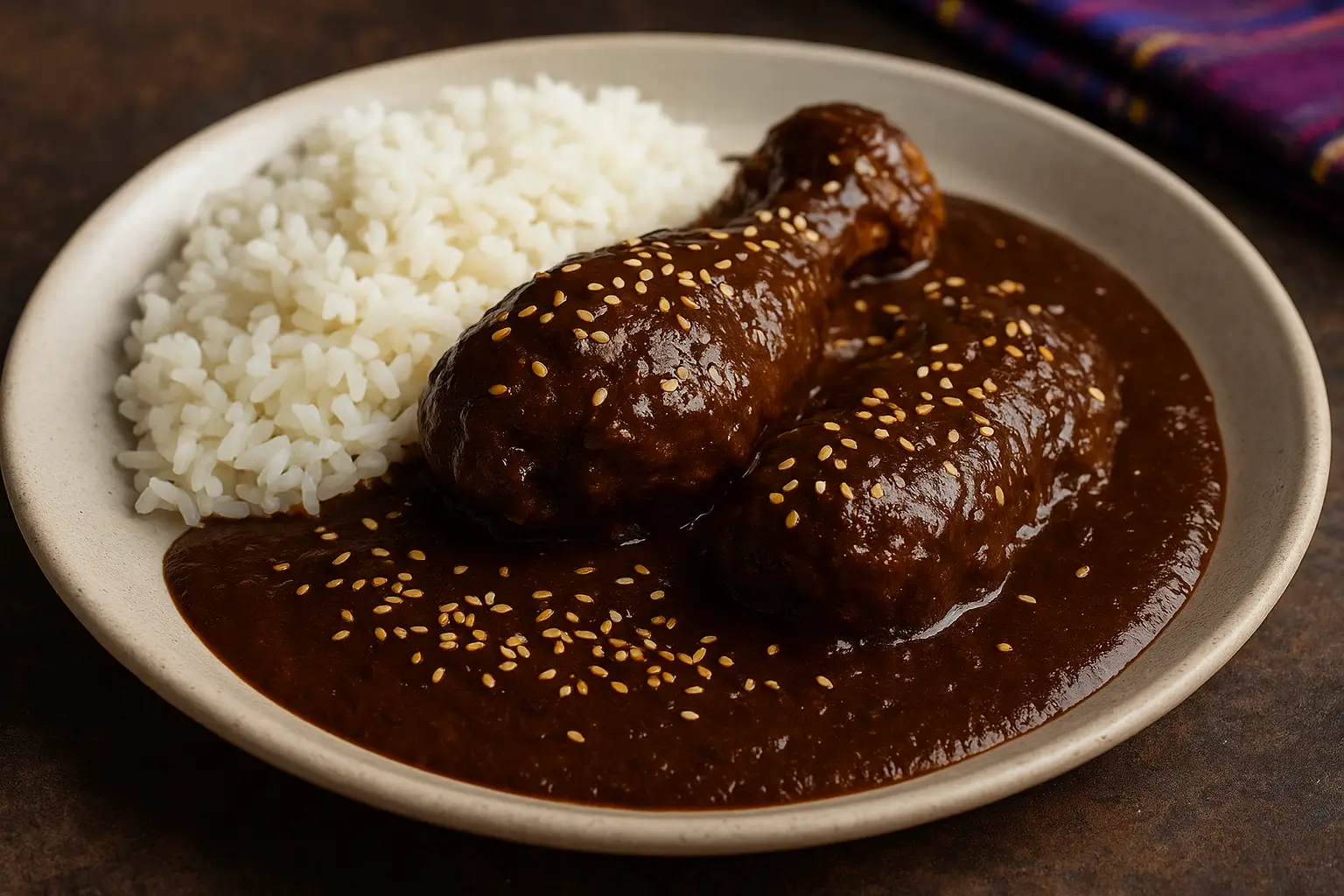
This is an insanely complex sauce with this deep, sepia color that’s almost black. It combines flavors that, on paper, seem like they’d fight each other:
Smoky and Fruity: From different dried chiles (ancho, mulato, pasilla).
Sweet: Brought in by dried fruits (like raisins) and a touch of sugar.
Spicy: A deep, rounded heat—not an aggressive burn (if you make it right).
Rich: Thanks to nuts, almonds, and seeds (sesame, peanuts).
Acidic: A hint of tomato and tomatillo to keep things balanced.
Bitter: The chocolate. Here’s the thing—chocolate isn’t the star. It’s a seasoning ingredient that brings depth and sophisticated bitterness to balance everything else.
This sauce traditionally shows up at the biggest celebrations: weddings, baptisms, national holidays. Making it is an act of love. And today, you’re going to learn how to pull it off.
The Legendary History: From a Puebla Convent to Your Kitchen
You can’t cook Mole Poblano without knowing its legend. The most famous story takes us back to the 17th century, to the Santa Rosa convent in Puebla.
Legend says a nun, Sister Andrea de la Asunción, got caught completely off guard when she found out an important archbishop was coming to visit. Panicking, with nothing worthy to serve him, she supposedly prayed. Then, inspired, she gathered everything she had in the convent’s humble kitchen: chiles, old spices, nuts, a piece of stale bread, and a touch of chocolate.
She ground everything together, simmered it for hours, and poured this miraculous sauce over a simple turkey. The archbishop was supposedly blown away by how complex the dish was.
The reality is probably more nuanced. Mole is a perfect example of mestizaje (cultural blending). It has clear pre-Hispanic roots (the Aztecs were already making mōlli with chiles, tomatoes, and seeds) that got fused with ingredients the Spanish brought over: nuts, almonds, cinnamon, cloves and, of course, chicken.
When you make this recipe, you’re not just following instructions. You’re literally recreating centuries of Mexican culinary history.
The Ingredients: The Secret Is in the Diversity
Here’s the part that freaks people out. Don’t bail on me now. We’re going to break this down together. The key is mise en place—that’s fancy chef talk for getting all your ingredients prepped in little separate bowls before you start cooking. This transforms chaos into a methodical process.
Think of it as a ballet of ingredients, divided into several groups.
The Holy Trinity of Dried Chiles (The Foundation)
This is the heart of your flavor. You’ll find these at Mexican markets or online. Critical point: Do NOT substitute these with “chili powder.”
Ancho Chiles (about 6-8): This is a dried poblano pepper. It’s fruity, mild, with raisin-like notes. It gives you that deep red color.
Mulato Chiles (about 4-5): Similar to ancho but ripened differently. It brings notes of chocolate, tobacco, and licorice. It gives depth and that dark color.
Pasilla Chiles (about 4-5): Long and black (the name means “little raisin”). It has a rich, almost herbal flavor.
(Optional) Chipotle Chile (1 or 2): A dried and smoked jalapeño. Use it if you want a smoky touch and a bit more heat.
The Aromatics and Fruits
- 1 medium white onion, cut into quarters
- 4-5 garlic cloves, peeled
- 2 Roma tomatoes, halved
- 4 tomatillos, husks removed and rinsed (they’re sticky)
- 1/3 cup raisins (golden or regular)
- 1/2 ripe plantain, sliced into rounds (if you can’t find it, half a very firm banana will work, but plantain is better)
The Nuts and Seeds (The Thickener)
- 1/2 cup sliced or whole almonds, unsalted
- 1/2 cup raw peanuts, unsalted
- 1/4 cup sesame seeds (plus 2 tablespoons for garnish)
- 2 tablespoons pumpkin seeds (pepitas), unsalted
The Dried Spices
- 1 small stick of Mexican cinnamon (about 2 inches) (or 1/2 teaspoon ground cinnamon)
- 4-5 whole cloves
- 1/2 teaspoon anise seeds
- 1/2 teaspoon black peppercorns
- 1 teaspoon dried oregano (Mexican, if possible)
- 1/4 of a stale bolillo (Mexican roll) or one slice of stale white bread, torn up
- 1 corn tortilla, slightly stale (it’s going to be fried)
The Finishing Elements
- About 2-2.5 oz Mexican chocolate (like Ibarra or Taza, which already has sugar and cinnamon) OR good quality dark chocolate (minimum 70% cacao)
- 1 tablespoon sugar (more or less, to balance)
- Salt, to taste
- About 6 to 8 cups chicken broth (ideally homemade, see step 1)
- 3 tablespoons lard (manteca) or neutral vegetable oil (divided)
For the Chicken
- 1 whole chicken (about 3-3.5 lbs), cut into 8 pieces (or 6-8 drumsticks/thighs)
- 1/2 onion, 2 garlic cloves, 1 celery stalk, 1 bay leaf: for poaching the chicken
The Complete Recipe: Your Step-by-Step Guide to Mole Poblano
This is a project, not a sprint. Clear your afternoon. Put on some music. The process is half the fun.
Step 1: The Chicken and Broth (The Foundation)
You need excellent broth. Don’t even think about using a bouillon cube.
- Place your chicken pieces in a large pot.
- Add the onion, garlic, celery, and bay leaf. Cover generously with water (about 10 cups). Add salt.
- Bring to a boil, then reduce heat and let it simmer gently for about 40-50 minutes, or until the chicken is just cooked through.
- Carefully remove the chicken pieces and set them aside.
- Strain the broth through a fine-mesh sieve. This is your liquid gold. You need it for the sauce. Keep it warm.
Step 2: Prep the Chiles (The Heart)
Wear gloves if you have sensitive skin.
- Open each dried chile with kitchen scissors. Remove the stem, all the seeds, and the veins (the inner membranes). That’s where most of the heat lives. We want the chile flavor, not the burn.
- Keep about a tablespoon of chile seeds aside (they’ll be toasted). Toss the rest.
Step 3: The Toasting (Waking Up the Flavors)
This is the most critical step. DO NOT BURN ANYTHING! A burned chile will make your entire mole bitter and unfixable.
- Heat a dry cast-iron skillet (comal) or non-stick pan over medium heat.
- Toast the chiles, one at a time or in small batches, flat. Press them down with a spatula.
- Count 15 to 30 seconds per side, no more. Just until they become pliable and super fragrant. You might see a little wisp of smoke. That’s good. If they’re smoking black, it’s too late.
- As you go, place the toasted chiles in a large bowl.
- Once all the chiles are toasted, pour about 4 cups of your hot chicken broth over them. They should be submerged. Place a plate on top to keep them under. Let them soak for 30 to 45 minutes to fully rehydrate.
Step 4: The Second Toasting and Frying (The Complexity)
While the chiles are soaking, use your skillet.
Toast the seeds: In the dry pan over medium-low heat, toast the sesame seeds until they’re golden and start popping (about 2-3 minutes). Remove immediately and set aside.
Toast the spices: In the same pan, toast the cinnamon, cloves, peppercorns, and anise for about 1 minute, until they smell incredible. Remove and set aside. (If you’re using powders, skip this step.)
The Frying: Add 2 tablespoons of lard (or oil) to the pan.
- Fry the stale bread and corn tortilla until they’re nice and golden. Remove and place them in a large bowl (this will hold all your fried ingredients).
- In the same oil, fry the almonds, peanuts, and pumpkin seeds until golden. Remove with a slotted spoon and add to the bread bowl.
- Add that tablespoon of reserved chile seeds. Fry them for 30 seconds (careful, they pop!) and add them to the bowl.
- Fry the plantain slices until they’re caramelized. Add them to the bowl.
- Finally, sauté the onion, garlic, tomatoes, and tomatillos. Cook until the vegetables are softened and slightly blackened in spots (about 10 minutes).
- Add the raisins, oregano, and the toasted spice mixture (cinnamon, etc.) to the pan. Cook for 1 more minute.
- Pour everything from this pan into the bowl with the bread/nut mixture. Also add the toasted sesame seeds (save some for garnish!).
Congrats. The bulk of the prep work is done.
Step 5: The Blending (Transforming into Paste)
You need a powerful blender. You’ll work in two parts.
Blending the Chiles: Drain the rehydrated chiles (save that soaking liquid!). Put them in the blender with about 1 cup of that soaking liquid. Blend until you have a very, very smooth puree.
Straining (MANDATORY): Place a fine-mesh strainer (sieve) over a large bowl. Pour the chile puree in and force it through the strainer with the back of a spoon or spatula. What’s left in the strainer (the chile skins), you toss. What you get in the bowl is velvety chile puree. This is the secret to luxurious texture.
Blending the Solids: Without cleaning the blender, add all the contents of your fried ingredients bowl (nuts, bread, tomatoes, etc.). Add about 1 cup of chicken broth (not the chile soaking liquid). Blend until you have a thick, smooth paste. If it’s too thick, add a bit more broth.
Note: You usually don’t need to strain this second paste since everything should have liquified.
Now you’ll have two bowls: a deep red chile puree and a thick beige/brown paste.
Step 6: The Magic of “Sazón” (The Alchemy)
This is where everything comes together. Grab your biggest pot or Dutch oven.
- Heat that last tablespoon of lard (or oil) over medium heat.
- Pour in the strained chile puree. Warning—it’s going to splatter and pop!
- Cook this paste, stirring constantly with a wooden spoon, for about 5 to 7 minutes. The paste will darken, thicken, and that “raw” chile smell will disappear.
- Now add the second paste (the one with nuts and tomatoes) into the pot. Mix both pastes together.
This is the sazón. You need to “fry” this combined paste. Lower the heat to medium-low and stir, stir, stir for 15 to 20 minutes. The paste will become very thick, very dark (almost black), and it’ll start pulling away from the sides of the pot. The oil will separate slightly. This is the sign that flavors are concentrated. Don’t burn the bottom!
Step 7: The Long Simmer (The Patience)
Your paste is ready. Start incorporating the rest of your hot chicken broth, one ladle at a time.
- At first, the paste will seize up. Keep whisking and adding broth. The sauce will go from a paste to a thick, velvety sauce. Add broth until you get the consistency of heavy cream (you might not use all the broth, or you might need a bit of water).
- Add the chocolate (broken into pieces) and the tablespoon of sugar. Stir until completely melted.
- Lower heat to minimum. Let it simmer very gently, half-covered (because it can splatter), for at least 1 hour. Ideally 2 hours. Stir often so the bottom doesn’t stick.
- Taste. This is where you become a chef. Does it need salt? (Probably). Is it too bitter? (Add a tiny pinch of sugar). Is it too flat? (A touch of salt). The flavor should be a perfect balance.
Step 8: The Final Union
A few minutes before serving, plunge your poached chicken pieces into the simmering Mole sauce.
Let them warm gently in the sauce for 10 to 15 minutes, enough time for them to soak up the flavor. Don’t overcook—the chicken is already cooked.
How to Serve Your Masterpiece
Mole Poblano isn’t served in small portions. This is a generous dish.
The Plate: Place a piece of chicken (a thigh, a drumstick) in a deep plate. Generously ladle Mole sauce over it. The sauce is the star; the chicken is its vehicle.
The Garnish: The only mandatory garnish is a shower of toasted sesame seeds on top.
The Sides: You absolutely must serve it with simple white rice (or arroz rojo, Mexican red rice) to soak up the sauce, and warm corn tortillas to mop up your plate.
Pro Tips for Foolproof Mole
You’ve got the recipe. Here’s the wisdom.
Make It the Day Before: This is tip number one from every Mexican abuela (grandmother). Mole Poblano is exponentially better the next day. The flavors need that night to marry, round out, and fuse together. Reheat it gently (you might need to add a bit of broth).
Don’t Burn ANYTHING: I’m serious. Not the chiles, not the seeds, not the paste in the pot. One burned flavor will ruin 30 ingredients in one shot. Better under-toasted than over.
Strain It: Don’t skip the chile straining step. This is the difference between rustic, grainy mole and restaurant-worthy, silky, luxurious sauce.
Lard Makes a Difference: If you can, use lard (manteca). It gives an authentic “something special” in flavor and texture that vegetable oil just can’t replicate.
Freeze the Leftovers: Mole freezes perfectly. Make a huge batch. Freeze the sauce without the chicken in airtight containers. It’s the best luxury “emergency meal” you could possibly have.
Your Turn
You did it. If you followed these steps, what’s simmering on your stove isn’t just chicken in sauce. It’s a distillation of history, a complex balance of flavors telling a story of convents, Aztecs, and family celebrations.
Making Mole Poblano means deciding that, for one day, speed isn’t the goal. The goal is the process, transforming raw ingredients into something deeply sophisticated.
Now it’s your turn. Cooking is about sharing. Have you tried this recipe at home? Tell us your secrets or family variations of Mole! Which chile do you use to give it that unique touch?
Share your Mole Poblano adventure in the comments below. Tell us about your successes, your questions, and even your failures. Let’s keep this delicious tradition alive together.
Ingredients
Equipment
Method
- Place the chicken pieces in a large pot with the halved onion, garlic cloves, bay leaf, and salt. Cover with water and simmer until fully cooked. Reserve the broth for the sauce.
- Remove stems and seeds from the dried chiles. Lightly toast them in a dry skillet, then soak in hot water for 15 minutes to soften.
- In a skillet, lightly toast the tortilla, seeds, nuts, spices, diced onion, garlic, tomatoes, plantain, and raisins until slightly browned and fragrant.
- Transfer all toasted ingredients (including the softened chiles) to a blender. Add some chicken broth and blend until you have a smooth paste.
- In a clean skillet, sauté the mole paste with a bit of oil for 10 minutes. Gradually add the remaining broth, stirring constantly, until you achieve a smooth, velvety sauce.
- Stir in the chocolate and let the sauce simmer over low heat for 30 to 40 minutes, until it thickens and the flavors meld together.
- Place the cooked chicken pieces into the hot mole sauce. Let them simmer together for 10 to 15 minutes so the chicken absorbs the flavors.
- Serve hot, garnished with toasted sesame seeds, alongside white rice or warm tortillas.
Notes
-Adjust the Heat: For a milder version, reduce the number of dried chiles or choose less spicy varieties.
-Chocolate Substitute: You can replace Mexican chocolate with slightly sweetened dark chocolate (70% cacao).