
If you want one dish that feels like a warm hug from the inside, Feijoada is it. This is Brazil’s iconic black-bean stew: slow-cooked, smoky, richly flavored, and built for sharing. Below I’ll walk you through everything — what to buy, how to prep, how to cook it without stress, and how to serve it so you get that genuine, convivial vibe. You’ll be surprised how doable this is at home.
What Feijoada actually is (and why it matters)
Feijoada (fay-zhoh-AH-dah) literally means “made with beans.” It’s a hearty stew centered on black beans and a mix of smoked and fresh pork, sausages, and sometimes beef. In Brazil, it’s more than food — it’s a weekend ritual, often served at family gatherings. When you cook Feijoada, you’re not just making a meal; you’re joining a tradition.
Ingredients for about 6–8 servings
I like a classic mix — you can tweak amounts to your taste:
Beans & aromatics
- 1 lb (450 g) dried black beans — soak overnight
- 2 medium yellow onions, finely chopped
- 6 garlic cloves, minced
- 2 bay leaves
- 1 tsp smoked paprika
- ½ tsp ground cumin
- Salt and black pepper, to taste
Meats
- 1 lb (450 g) pork shoulder, cut into 1–2-inch chunks
- ½ lb (225 g) bacon or pork belly, chopped
- ½ lb (225 g) linguiça, chorizo, or other smoked sausage, sliced
- 1 smoked ham hock or pork shank
- Optional: ½ lb (225 g) carne seca (dried salted beef) — soak overnight to remove excess salt
Finish & garnish
- 1 orange, halved (adds a subtle brightness — don’t eat it)
- Fresh cilantro or parsley, chopped (for garnish)
Traditional sides
- Fluffy white rice
- Farofa (toasted cassava flour)
- Sautéed collard greens (thinly sliced and quickly sautéed with garlic)
- Orange slices for the table
Equipment & prep notes
You don’t need a fancy setup. A heavy Dutch oven or large heavy pot works best. If you have a slow cooker or pressure cooker, those can be used (I’ll add notes below).
Do this ahead: soak the beans overnight and, if using carne seca, soak that too. It saves time later and gives a cleaner-tasting stew.
Step-by-step: slow cook method (best flavor)
- Drain and rinse the soaked black beans. Set aside.
- Soak salty meats (like carne seca) for a few hours if needed, then drain.
- Brown the meats. Heat a tablespoon of oil in your Dutch oven. Brown bacon first until it renders fat, then remove and set aside. Brown pork shoulder in batches so it gets color. Add sausages just to get some color. Browning = flavor.
- Sauté aromatics. In the same pot, add onions and garlic; cook until soft and fragrant. Scrape up the brown bits — that’s flavor. Stir in smoked paprika, cumin, and bay leaves.
- Combine. Return all meats to the pot. Add the black beans and enough water or unsalted stock to cover everything by about 1–2 inches. Tuck in the halved orange (it mellows the fat and adds subtle citrus).
- Simmer low. Bring to a gentle boil, then reduce to a low simmer. Partially cover and cook for 2.5–3 hours, stirring occasionally and skimming excess fat if you want a lighter stew. Add hot water if the level gets too low. The beans should be tender and meats falling-apart.
- Adjust. Remove the orange and bay leaves. Taste and add salt/pepper as needed (be careful: smoked meats can add a lot of salt). Finish with chopped herbs if you like.
- Serve. Spoon a generous ladle over white rice, add farofa and a heap of collard greens on the side, and place orange slices on the plate.
Faster options (pressure cooker & slow cooker)
- Pressure cooker / Instant Pot: Sauté meats and aromatics on sauté mode, add beans and water, seal and cook ~35–45 minutes on high (depending on bean soak). Let natural release.
- Slow cooker: Brown meats and sauté aromatics on the stove, then transfer to slow cooker with beans and water. Cook on low for 6–8 hours.
Both methods work, though the stovetop low simmer gives the most controlled, traditional result.
Tips that actually help
- Don’t rush the browning. Take time to brown meats; it’s where much of your flavor comes from.
- Keep the orange in the pot. It seems odd, but the orange half reduces greasiness and adds balance. Remove before serving.
- Make it a day ahead. Feijoada tastes even better after a night in the fridge — the flavors settle and deepen.
- Skim fat if you want lighter. Chill the stew overnight and remove the solidified fat the next day.
- Serve family-style. It’s meant to be shared — put the pot in the center and let people help themselves.
Variations you’ll actually enjoy
- Vegetarian Feijoada: Use smoked mushrooms, smoked tofu, hearty root veg (like beets and carrots), extra smoked paprika, and vegetable stock. Add cooked black beans at the end if you want shorten cooking.
- Spicier version: Add fresh chopped chili or a pinch of malagueta pepper toward the end.
- Seafood twist (coastal Brazil): Some coastal regions add salted cod or dried fish — if you try that, soak well to control salt.
Health & nutrition notes
Feijoada is rich and filling. Black beans bring fiber, plant protein, and iron, while the meats add protein and iron too. If you’re watching saturated fat, use leaner cuts, trim visible fat, or reduce bacon. Pair with plenty of greens to round out the meal.
Cultural snippets worth knowing
- In Brazil, Feijoada is often a Saturday tradition, a social meal that stretches into the afternoon with music, conversation, and (sometimes) a caipirinha.
- The dish reflects a blending of cultures — indigenous, African, and Portuguese — and tells a story about resourcefulness and shared cooking traditions.
- Serving it with farofa and orange slices is not a gimmick — those textures and flavors were purposely paired to balance the stew’s richness.
FAQs
Q: Do I have to soak the beans?
A: Soaking helps, yes — it shortens cooking time and gives a creamier texture. If you’re in a rush, use a pressure cooker.
Q: Is Feijoada extremely salty?
A: It can be if you overdo salted meats. Soak salty cuts ahead, and taste before adding extra salt.
Q: Can I freeze leftovers?
A: Yes — Feijoada freezes well for up to 2 months. Thaw slowly in the fridge and reheat gently.
Q: What to drink with Feijoada?
A: A cold beer, fresh limeade, or a classic caipirinha are all excellent. For nonalcoholic, try sparkling water with orange slices.
Feijoada is a celebration of flavor and company. It takes time, but it rewards you with depth, comfort, and that special “we’re all here together” feeling. So pick a day, invite a few people, prep the beans the night before, and enjoy the slow rhythm of making something meaningful.
When you make your Feijoada, take a photo and share it — I’d love to see how you customized it. Tag your post with #YourFeijoada (or your blog’s name), and tell me what twist you tried. Happy cooking!
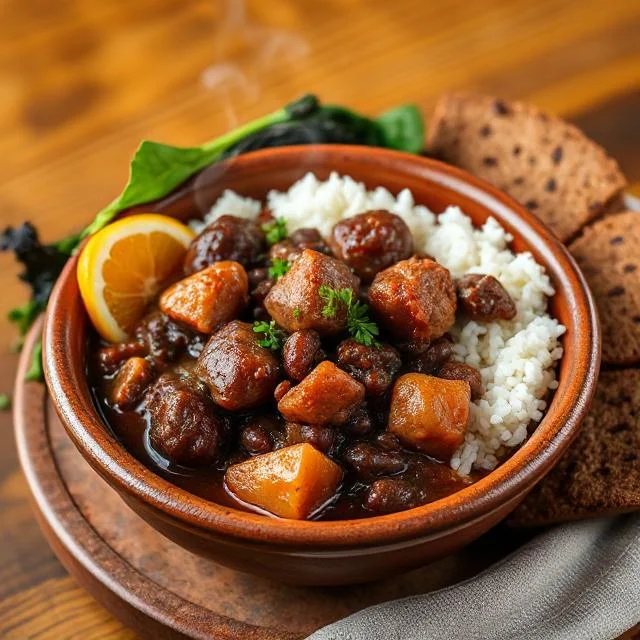
Feijoada (Brazilian Black Bean Stew)
Ingredients
Equipment
Method
- Drain and rinse soaked black beans. Set aside.
- If using salted meat (carne seca or bacon), soak in water to reduce saltiness, then drain.
- In a large Dutch oven, brown bacon first until fat renders. Remove and set aside.
- Brown pork shoulder in batches to develop color. Add sausages for color.
- Remove meats and sauté onions and garlic until fragrant.
- Add smoked paprika, cumin, and bay leaves to aromatics.
- Return meats to pot. Add beans and enough water or broth to cover by 1–2 inches. Add halved orange.
- Bring to gentle boil, reduce heat, cover partially, and simmer 2–3 hours until beans are tender and meats are falling apart.
- Remove bay leaves and orange. Taste and adjust salt and pepper. Garnish with parsley or cilantro.
- Serve hot with steamed rice, sautéed collard greens, farofa, and orange slices.