
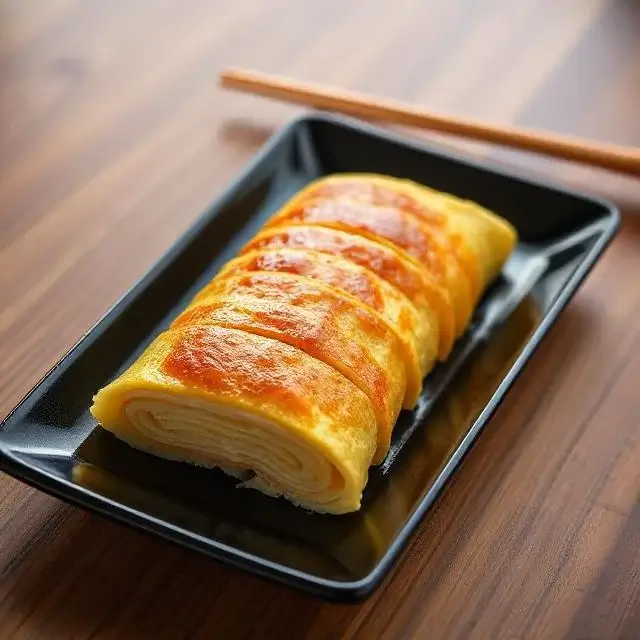
Japanese cuisine is a delicate balance of taste, aesthetics, and technique. Among its iconic dishes, the Japanese rolled omelette—known as Tamagoyaki—holds a special place. Soft, slightly sweet, and skillfully layered, this omelette is not just a breakfast dish in Japan but also a staple in bento boxes and sushi meals. In this article, we’ll explore its origins, how to make it at home, and all the tips to succeed, whether you’re a beginner or a passionate home cook.
A Bit of History: Where Does Tamagoyaki Come From?
Tamagoyaki (tamagoyaki = “fried egg” in Japanese) has long been part of traditional Japanese cuisine. Originally, this dish was influenced by Chinese culinary techniques, especially the idea of cooking in layers. Over the centuries, the Japanese developed their own version: a delicate omelette made by folding thin layers of beaten egg over one another in a rectangular pan called a makiyakinabe or tamagoyakiki.
Its presence in Japanese culture is such that many sushi chefs are judged on the quality of their tamagoyaki—it’s considered a true test of technique.
Ingredients You’ll Need
For a 4-person serving:
- 4 large eggs
- 1 tbsp sugar
- 1 tbsp mirin (sweet rice wine)
- 1 tsp soy sauce
- 1 pinch of salt
- 1 tsp dashi (optional, for umami depth)
- Neutral oil (for cooking)
Equipment Needed
- Rectangular tamagoyaki pan (recommended, but you can use a small round pan if needed)
- Chopsticks or a silicone spatula
- Mixing bowl
- Fine mesh sieve (for a smooth texture)
- Paper towel
Step-by-Step Preparation
1. Beat and Season the Eggs
Crack the eggs into a bowl and beat gently without over-whisking. Add sugar, mirin, soy sauce, salt, and dashi if using. Mix until combined. For an ultra-smooth texture, strain the mixture through a sieve.
2. Prepare the Pan
Heat the pan over medium heat. Dip a rolled-up paper towel in oil and grease the pan evenly. Keep the oiled paper towel nearby to re-grease between layers.
3. Cook in Layers
Pour a small amount of egg mixture into the pan to cover the bottom in a thin layer. Once it’s half set but still moist on top, begin rolling the omelette from one side to the other using chopsticks or a spatula.
Slide the rolled egg back to the starting point of the pan. Grease the pan again, pour a new thin layer of egg, lifting the cooked roll slightly to let the uncooked egg flow underneath. Once partially cooked, roll again—continue this process until you’ve used all the mixture.
4. Shape and Rest
Once done, gently press the roll with a bamboo mat or spatula to shape it. Let it rest for a few minutes before slicing.
Serving Suggestions
Cut into 6–8 even pieces. Serve warm or at room temperature, with grated daikon radish, soy sauce, or simply as-is in a bento box or alongside a bowl of miso soup.
Tips for a Perfect Tamagoyaki
- Don’t overbeat the eggs: it keeps the texture silky.
- Use low to medium heat: prevents browning and ensures tenderness.
- Practice your rolling: the first few attempts may be uneven, but you’ll improve quickly.
- Add dashi: it brings complexity and umami to the flavor.
Common Variations
- Tamagoyaki with cheese: A soft, melting center.
- Nori Tamagoyaki: Add thin sheets of seaweed between layers.
- Vegetable Tamagoyaki: Finely chopped green onions or carrots can add color and crunch.
Nutritional Benefits
Tamagoyaki is rich in high-quality proteins and contains a mix of carbohydrates and fats (mainly from the egg yolks). Adding dashi or vegetables can enhance its nutritional value.
FAQ –
Is Tamagoyaki sweet or savory? It’s slightly sweet but balanced by soy sauce and umami from dashi.
Can I make Tamagoyaki without a rectangular pan? Yes, a small nonstick round pan will do—just shape the omelette more carefully.
How do I store leftovers? Wrap tightly in plastic wrap and store in the fridge for up to 2 days. Best eaten at room temperature.
Can Tamagoyaki be frozen? Yes, although texture may change. Wrap individually and thaw in the fridge.
Is Tamagoyaki the same as Dashimaki Tamago? Not quite. Dashimaki uses more dashi, making it moister and more savory.