
Moqueca is a flavorful Brazilian fish stew featuring coconut milk, fresh cilantro, and a medley of colorful vegetables that creates pure magic in your mouth. Whether you’re expanding your global cooking repertoire, planning an unforgettable dinner party, or simply craving bold tropical flavors, this comprehensive guide transforms you into a moqueca master capable of recreating Bahia’s most iconic dish.
What Makes Moqueca Brazil’s Culinary Crown Jewel
Unlike typical fish soups or European-style bouillabaisses, moqueca stands apart through its distinctive use of ingredients that tell a story spanning three continents. The vibrant marriage of tender seafood, creamy coconut milk, tangy lime, and aromatic herbs creates layers of flavor that dance across your palate with each spoonful.
What truly distinguishes authentic moqueca is the addition of dendê—Brazilian red palm oil that transforms the stew into something extraordinary. This brilliant orange-red oil delivers an earthy, slightly nutty flavor profile you simply cannot replicate with substitutes. It’s the secret ingredient that separates genuine moqueca from ordinary fish stews.
Three Cultures, One Spectacular Dish
The history woven into every bowl of moqueca spans centuries of cultural exchange and resilience. Indigenous Brazilian communities contributed their sophisticated knowledge of local fish varieties, cooking techniques using manioc, and understanding of regional ingredients that thrive in tropical climates.
African slaves brought dendezeiro palm trees to Brazil during the colonial period, which adapted remarkably well to the northeastern coastal climate, particularly in the region between Ilhéus and Salvador. Enslaved Africans used dendê oil to prepare foods for religious offerings to their orixás (deities), making it central to Afro-Brazilian spiritual practices that persist today in Candomblé traditions.
Portuguese colonizers introduced Mediterranean staples—tomatoes, onions, olive oil—that became inseparable from Brazilian cooking. This convergence of culinary traditions created something entirely new: a dish that cannot be reduced to any single influence but represents the complex, beautiful reality of Brazilian culture itself.
Understanding Dendê: The Heart of Authentic Moqueca
Dendê is Brazilian red palm oil extracted from the fruit of the African oil palm tree, delivering the highly distinctive flavor and vibrant color that defines traditional Bahian moqueca. Brazilians adopted the name “dendê” from the Kimbundu word “ndende,” reflecting the profound influence Africans and Afro-Brazilians wielded in shaping the landscape and cuisine.
This ingredient carries profound cultural significance beyond mere flavor. It represents the preservation of African culinary heritage despite centuries of oppression and attempted cultural erasure. Every time you use dendê, you honor the resilience and contributions of Afro-Brazilian communities.
The oil possesses an earthy, subtly fruity taste that’s difficult to describe but impossible to forget once experienced. Its vibrant hue comes from natural carotenoids, the same compounds that make carrots orange. When heated gently, it releases aromatic compounds that permeate the entire stew.
Navigating the Two Major Moqueca Styles
Before gathering ingredients, you should understand the regional variations that spark passionate debates among Brazilian food lovers.
Moqueca Baiana (Bahian Style)
This version hails from Bahia and proudly showcases African influences through generous use of dendê and full-fat coconut milk. The result delivers rich, creamy texture with bold flavors that announce themselves confidently. The final color ranges from deep orange to reddish-gold depending on your dendê quantity.
Bahian cooks traditionally prepare moqueca in clay pots called panelas de barro, which distribute heat evenly and add subtle earthiness. The style embraces abundance—plenty of oil, generous coconut milk, and layers of flavor building upon each other.
Moqueca Capixaba (Espírito Santo Style)
Neighboring Espírito Santo state created its own interpretation that deliberately excludes dendê in favor of olive oil or annatto (urucum). Some versions skip coconut milk entirely or use it sparingly. This lighter approach allows the delicate fish flavors to shine more prominently.
Residents of Espírito Santo defend their version fiercely, arguing it better respects the natural taste of fresh seafood. While both styles have merit, this guide focuses on the more internationally recognized Bahian preparation. You can easily adapt by swapping oils if dendê proves difficult to source.
Essential Ingredients for Spectacular Moqueca
Success begins with exceptional ingredients—particularly the freshest possible seafood and authentic supporting players.
Core Components:
Seafood Selection:
- 1.5 pounds firm white fish fillets (halibut, grouper, snapper, mahi-mahi, cod)
- ½ pound large shrimp, peeled and deveined (optional)
- ½ pound calamari rings (optional)
- 8-10 mussels in shells for dramatic presentation (optional)
Liquid Base:
- 14 oz can full-fat coconut milk (never light)
- 1 cup quality fish stock or seafood broth
- 3 tablespoons authentic dendê (red palm oil)
- 2 tablespoons olive oil
Aromatic Vegetables:
- 2 large yellow onions, thinly sliced
- 4 ripe tomatoes, cut into wedges
- 1 red bell pepper, sliced into strips
- 1 green bell pepper, sliced into strips
- 1-2 jalapeños or malagueta peppers, seeded and minced
- 5-6 garlic cloves, minced
Brightness and Herbs:
- 3-4 limes (juice and zest)
- Large bunch fresh cilantro, roughly chopped
- Fresh scallions for garnish
Seasonings:
- 2 teaspoons sea salt
- 1 teaspoon freshly ground black pepper
- 1 teaspoon smoked paprika
- 2-3 bay leaves
Selecting Premium Ingredients
Your fish choice dramatically impacts the final dish. Seek firm, meaty varieties that hold their shape during gentle simmering. Grouper represents the traditional Bahian choice, but snapper, halibut, or even sustainable cod work beautifully. Avoid delicate fish like tilapia or sole that disintegrate too easily.
Freshness isn’t negotiable. Your fish should smell like clean ocean, never “fishy.” Bright, clear eyes, vibrant red gills, and flesh that springs back when pressed indicate quality. If buying fillets, look for translucent, moist flesh without browning edges or dry spots.
Finding authentic dendê requires visiting Brazilian, African, or well-stocked international grocers. The oil should display that characteristic red-orange color from natural carotenoids. Refined versions lose the distinctive flavor and color—avoid these if possible. If dendê remains elusive, annatto oil provides color approximation though the taste differs noticeably.
Full-fat coconut milk creates the luxurious creaminess defining great moqueca. Light versions produce watery, disappointing results. Shake cans before purchasing—you want liquid movement indicating proper consistency. Cans feeling solid contain overly thick cream requiring dilution.
Step-by-Step Guide to Perfect Moqueca
Marinating Your Seafood (30 minutes)
Begin by cutting fish into generous 2-inch chunks. Pieces too small fall apart during cooking; oversized chunks cook unevenly. Place in a wide bowl, ensuring pieces don’t overlap excessively.
Add juice from two limes, one tablespoon olive oil, half the minced garlic, salt, and black pepper. Use your hands to gently coat every piece—this tactile approach ensures even coverage. The acidic marinade begins “cooking” proteins slightly through denaturation while infusing flavor.
Cover and refrigerate for 20-30 minutes maximum. Extended marination beyond one hour makes fish mushy as excessive acid breaks down protein structures. If using shrimp or calamari, marinate separately for only 15 minutes—their delicate texture requires less time.
Building Your Flavor Foundation (15 minutes)
Heat olive oil over medium flame in a large, heavy-bottomed pot or traditional clay pot if you’re fortunate enough to own one. Dutch ovens work excellently, distributing heat evenly while retaining it well.
Add sliced onions, stirring occasionally until they soften and turn translucent—about 5-6 minutes. Don’t rush this step; properly sweated onions provide sweet backbone flavor. They should look glossy and wilted without any browning.
Stir in minced garlic and chopped peppers, cooking for 2-3 minutes until fragrantly aromatic. The kitchen should smell incredible at this point. Add your tomato wedges and bay leaves, letting them simmer for 5 minutes until tomatoes begin releasing their juices and breaking down slightly.
This vegetable base (sofrito, essentially) creates the flavor foundation everything else builds upon. Take time to develop it properly—this isn’t a dish to rush.
Creating the Coconut-Dendê Sauce (10 minutes)
Pour in fish stock, bringing to a gentle simmer. The liquid deglazes your pot, lifting all those flavorful caramelized bits clinging to the bottom. Scrape with a wooden spoon to incorporate them fully.
Add coconut milk, stirring until smoothly combined with the stock. Reduce heat to medium-low—you want steady bubbling, never a rolling boil that would separate the coconut milk into unappetizing curds.
Now comes the magical moment: drizzle in that vibrant dendê oil. Watch the transformation as your sauce shifts from pale cream to stunning orange-gold. The dendê releases its earthy aroma, filling your kitchen with authentic Bahian fragrance.
Season generously with salt, pepper, and smoked paprika. Taste and adjust—the sauce should balance rich creaminess with bright acidity and subtle warmth. This base flavor determines your final result, so perfect it before proceeding.
Gently Cooking Your Seafood (12-15 minutes)
Reduce heat to low, maintaining the gentlest possible simmer. Carefully nestle fish pieces into the sauce, submerging them partially. Resist stirring—fish remains fragile and breaks apart easily when disturbed.
Cover your pot and let steam work its magic for 5-7 minutes without peeking. Fish is done when flesh turns opaque and flakes easily with a fork. Overcooking creates dry, rubbery texture, so watch timing carefully.
If using shrimp, add them after 4 minutes of fish cooking time. Shrimp need only 3-4 minutes total—they turn pink and curl when perfectly cooked. Calamari goes in during the final 2 minutes. Overcooked squid becomes tough and chewy; properly cooked calamari melts tenderly.
Mussels make stunning presentations when arranged on top during the last 3-4 minutes. They’ll open dramatically, releasing briny juices that enrich your sauce. Discard any that refuse to open after cooking.
Final Touches (5 minutes)
Remove from heat and let rest covered for 3-4 minutes. This standing time allows proteins to relax and juices to redistribute evenly. The residual heat continues gentle cooking while flavors marry completely.
Just before serving, squeeze remaining lime juice over the top and shower generously with fresh cilantro. The herbs wilt slightly from heat, releasing their bright, citrusy aroma that lifts the entire dish.
Serving Moqueca the Brazilian Way
Traditional Presentation
Moqueca demands to be brought to the table in its cooking vessel—this theatrical presentation forms part of the experience. The sight of that brilliantly colored stew steaming in an earthenware pot creates anticipation and excitement.
Provide a large serving spoon, letting guests help themselves family-style. This communal approach encourages conversation and connection, embodying Brazilian hospitality at its finest.
Essential Accompaniments
Fluffy White Rice: Steamed jasmine or basmati rice provides the perfect canvas for that luscious sauce. Cook it slightly firm so it maintains texture under generous ladlefuls of stew.
Pirão (Cassava Porridge): This traditional accompaniment gets made by whisking cassava flour (farinha de mandioca) into a ladle of hot moqueca broth until it thickens into smooth, pudding-like consistency. Pirão adds comforting heartiness while naturally thickening the sauce.
Farofa (Toasted Cassava): Crispy toasted cassava flour sautéed with butter, onions, and sometimes bacon bits provides textural contrast. Sprinkle it over your portion for bites alternating between creamy and crunchy.
Lime Wedges: Always serve extra lime wedges so diners can adjust brightness to personal preference with an extra squeeze of citrus.
Sliced Avocado: Though not strictly traditional, creamy avocado slices complement the rich stew beautifully while adding nutritional value.
Perfect Beverage Pairings
Icy caipirinhas—Brazil’s national cocktail made with cachaça, lime, and sugar—pair naturally with moqueca’s rich flavors. The lime’s acidity cuts through coconut cream while the spirit’s slight sweetness balances spice.
Fresh coconut water served directly from the shell offers refreshing non-alcoholic accompaniment. Passion fruit juice diluted with sparkling water provides another excellent option. Light Brazilian lagers like Brahma or Skol work wonderfully too.
Creative Variations Worth Exploring
All-Seafood Extravaganza
Transform your moqueca into a showstopping feast by combining multiple seafood varieties—fish, jumbo shrimp, scallops, mussels, clams, even lobster tail. This abundance creates special-occasion drama worthy of celebrations.
Add each seafood type based on required cooking time: lobster first (8-10 minutes), firm fish next (6-7 minutes), then shrimp and scallops (3-4 minutes), with mussels and clams finishing last (3 minutes).
Plant-Based Adaptation
Create surprising vegetarian moqueca using hearts of palm, thick-sliced portobello mushrooms, firm tofu, and roasted butternut squash chunks. This version showcases how the coconut-dendê sauce carries the dish even without seafood.
Use rich vegetable broth infused with kombu seaweed for that oceanic umami character. The coconut milk and dendê provide the same luxurious richness as traditional versions.
Lighter Contemporary Version
Reduce dendê to one tablespoon (enough for signature color and flavor) and use light coconut milk. Increase vegetable proportions while slightly reducing protein quantities.
This adaptation maintains moqueca’s essence while creating something more aligned with modern dietary preferences without sacrificing satisfaction.
Fusion Experimentation
Introduce Thai influences with fresh grated ginger, lemongrass, and Thai basil. Add fish sauce for extra umami depth. This creative bridge between two great coastal culinary traditions yields fascinating results.
Troubleshooting Common Challenges
Fish Falling Apart
This frustrating issue usually stems from excessive stirring or overly delicate fish varieties. Once seafood enters the pot, resist any urge to stir. Let gentle heat do its work undisturbed.
Choose firmer fish species like grouper, snapper, or halibut that maintain structure better. Avoid tilapia, sole, or other particularly fragile options.
Watery, Thin Sauce
Excess liquid or insufficient reduction causes this problem. Increase heat slightly and simmer uncovered for a few extra minutes to concentrate flavors and thicken consistency.
Alternatively, create thick pirão by mixing cassava flour with some sauce, then gradually incorporate it back into your pot. This traditional method naturally thickens while enhancing texture.
Lacking Depth and Flavor
Bland moqueca despite proper seasoning often traces to inferior broth. Quality fish stock forms your flavor foundation—weak broth produces weak results.
Boost umami with tomato paste, a few finely minced anchovies that dissolve invisibly, or a splash of Asian fish sauce. Any of these amplifies savory depth dramatically.
Coconut Milk Separating
Vigorous boiling causes coconut milk to break into unappetizing oily and watery layers. Always maintain gentle simmering rather than aggressive bubbling.
If separation occurs, remove from heat and whisk vigorously to re-emulsify. A teaspoon of cornstarch dissolved in cold water, stirred in carefully, helps stabilize the emulsion.
Storage and Reheating Strategies
Proper Storage
Allow moqueca to cool completely before transferring to airtight glass containers. Refrigerate up to 3 days. Flavors actually deepen and meld during this time—many insist leftover moqueca surpasses the fresh version.
Store rice separately to prevent it from absorbing all the sauce and becoming mushy. Keep them in different containers for best results.
Gentle Reheating
Rewarm slowly over low heat in a saucepan, adding splash of coconut milk or broth if sauce has thickened too much. Avoid microwaving, which overcooks fish and separates coconut milk unappealingly.
Heat just until sauce barely simmers—remember the seafood is already cooked. You’re merely restoring serving temperature, not cooking again.
Freezing Considerations
While technically possible for up to 2 months, freezing noticeably impacts fish texture, making it drier and more flaky. Coconut milk may also separate irreversibly.
Better approach: freeze the sauce without seafood, then add fresh fish when reheating. This preserves texture while still offering make-ahead convenience.
Nutritional Benefits and Dietary Adaptations
Health Advantages
White fish provides lean, high-quality protein essential for muscle maintenance and satiety. Fatty fish varieties offer omega-3 fatty acids supporting heart and brain health.
Coconut milk contains medium-chain triglycerides (MCTs) that your body metabolizes efficiently for energy. While high in saturated fat, coconut MCTs possess different metabolic properties than animal fats.
Dendê delivers exceptional vitamin E levels and carotenoid antioxidants protecting against oxidative stress. Its vibrant color indicates these beneficial compound concentrations.
Fresh tomatoes provide lycopene—an antioxidant linked to prostate and cardiovascular health. Colorful bell peppers overflow with vitamin C, supporting immune function and collagen synthesis.
Accommodating Various Diets
Paleo-Friendly: Traditional moqueca fits paleo protocols naturally. Serve over cauliflower rice or zucchini noodles instead of white rice.
Keto-Compatible: With abundant healthy fats and substantial protein, moqueca suits ketogenic eating perfectly. Simply skip rice and serve alongside low-carb vegetables.
Gluten-Free: All traditional ingredients exclude gluten naturally. Just verify your broth and seasonings contain no hidden gluten-containing additives.
Whole30 Compliant: Check that your coconut milk contains only coconut and water. Skip sugar in any form and verify all seasonings meet Whole30 standards.
The Science of Perfect Moqueca
Acid Marinade Chemistry
Citric acid from lime juice denatures fish proteins through a process called “acid cooking.” Long protein chains unravel and rearrange, creating firmer texture that helps fish maintain integrity during heat cooking.
This partial denaturation also creates a slightly “cooked” exterior that seals interior moisture, resulting in juicier finished fish.
Coconut Milk Emulsion
Coconut milk contains natural emulsifiers that keep fats dispersed evenly throughout the aqueous phase. Adding dendê creates complex triple emulsion—water, coconut fat, and palm oil—stabilized by coconut proteins and lecithins.
Gentle heat maintains this emulsion stability. Excessive heat breaks molecular bonds, causing separation into unappealing layers.
Flavor Development Through Gentle Heat
Slow, gentle cooking allows aromatic volatile compounds to diffuse gradually throughout the liquid. Flavor molecules migrate from vegetables into sauce, then infuse into seafood, creating integrated harmony rather than distinct separate tastes.
Cultural Context and Dining Traditions
Moqueca’s Place in Bahian Identity
In Bahia, moqueca transcends mere sustenance to embody regional cultural identity. It symbolizes African-Brazilian communities’ resilience and their successful preservation of ancestral traditions despite centuries of oppression.
Salvador’s traditional restaurants serve moqueca in clay pots over individual burners, keeping the stew steaming throughout the meal. This dramatic presentation forms an integral part of the experience.
Communal Eating Rituals
Bahian families traditionally prepare moqueca for Sunday gatherings and special celebrations. The preparation becomes communal ritual where multiple generations collaborate—elders share secret techniques while young people learn ancestral methods.
Serving family-style from a central pot encourages conversation and connection. Everyone helps themselves freely, creating relaxed atmosphere perfect for storytelling and strengthening family bonds.
Expert Tips for Moqueca Mastery
Secrets from Bahian Cooks
Traditional chefs emphasize patience—rushing any step produces mediocre results. Each phase requires appropriate time for full flavor development.
Some experts recommend preparing your sauce a day ahead, allowing overnight flavor maturation. The next day, gently reheat before adding fresh seafood for final cooking.
Restaurant-Level Elevation
Transform moqueca into gastronomic experience using premium seafood—live lobster, wild-caught jumbo shrimp, diver scallops. Garnish with microgreens, edible flowers, and lime pearls for stunning presentation.
Serve in individual ceramic bowls, each garnished artistically with distinct decorative elements. This contemporary approach honors tradition while elevating aesthetics.
–Conclusion :
You now possess complete knowledge for creating authentic, restaurant-quality moqueca in your home kitchen. This spectacular stew represents far more than ingredients and techniques—it’s a window into Brazil’s complex, fascinating history where three continents converged to create something entirely unique.
Moqueca’s magic lies in balancing creamy richness, bright acidity, subtle heat, and oceanic freshness. Each element plays its part in a flavor symphony where nothing dominates but everything harmonizes perfectly.
Don’t fear if your first attempt doesn’t match expectations perfectly. Mastery develops through practice and experience. Each moqueca you prepare deepens your understanding of subtle nuances—recognizing perfect fish doneness, balancing oils for ideal color, adjusting seasonings to satisfy your personal palate.
What makes moqueca truly special is its power to gather people. When you carry that steaming clay pot to your table, you’re perpetuating centuries-old traditions of sharing and hospitality. The aromas escaping from the uncovered pot create collective anticipation, transforming a simple meal into memorable event.
That vibrant orange-red dendê staining your sauce tells the story of millions of enslaved Africans who brought their culinary traditions across the ocean, refusing to let their cultural identity be erased. Each spoonful honors their resilience and their indelible contributions to Brazilian culture.
The creamy coconut milk evokes indigenous influences that first taught newcomers how to use the tropics’ abundant gifts. Knowledge of cassava preparation, understanding local fish, cooking techniques—all originated with Brazil’s original peoples.
Tomatoes, onions, and garlic remind us of Portuguese presence that introduced Mediterranean staples now inseparable from Brazilian cooking. This three-way fusion created a culinary identity that cannot be reduced to any single influence.
Ready to embark on your moqueca journey? Visit your fishmonger today for the freshest catch available. Search international markets for that distinctive dendê oil. Gather your ingredients with care and anticipation.
Invite friends and family to share this experience. Explain the fascinating history behind each component while you cook. Transform preparation into educational, social event rather than mere kitchen task.
When you bring that steaming, fragrant pot to the table, watch faces light up with delight. Listen for exclamations of surprise and pleasure as your guests taste their first bites. These moments of shared joy around good food create life’s most precious memories.
Document your culinary adventure by photographing your creations. Share your successes (and lessons learned from challenges!) on social media using #HomemadeMoqueca. Join the growing community of Brazilian food enthusiasts discovering this extraordinary country’s gastronomic treasures.
Subscribe to receive more authentic Latin American recipes, professional chef techniques, and fascinating cultural stories that enrich every dish. Transform your kitchen into a gateway to the world, one memorable meal at a time.
Moqueca awaits—this glorious stew that captures Brazil’s very essence in every creamy, smoky, deliciously complex spoonful. Your culinary journey to Bahia begins now, in your own kitchen, with simple ingredients and respectful technique. Bom apetite!
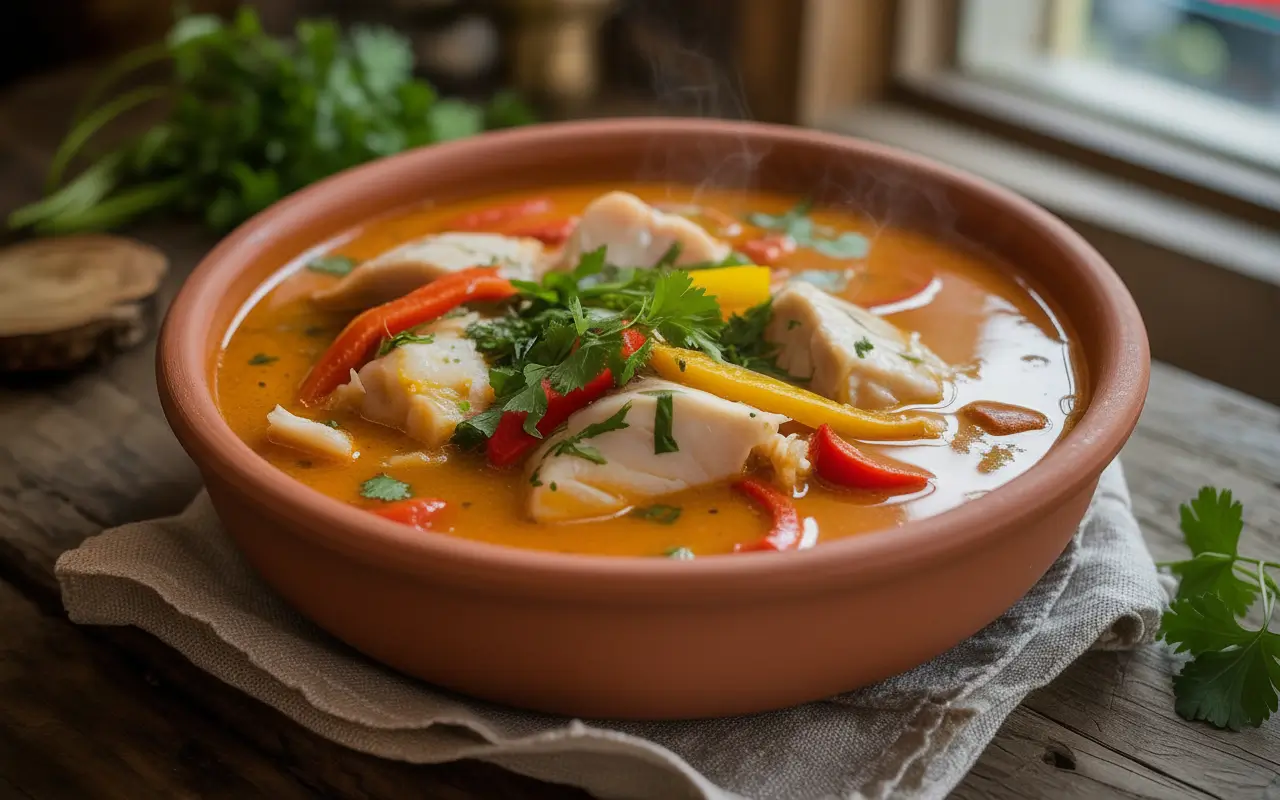
Moqueca Bahianaise – Brazilian Fish and Seafood Stew
Ingredients
Method
- Fish Marinade (30 min): Cut fish into large pieces. Mix with 2 tbsp lime juice, 1 tbsp olive oil, salt, and pepper. Refrigerate 20-30 min.
- Aromatic Base (15 min): In a pot, heat olive oil, sauté onions 5 min. Add garlic and pepper, then bell peppers and tomatoes. Simmer 5 min with bay leaves.
- Creamy Sauce (10 min): Pour in fish stock, bring to gentle boil. Add coconut milk and dendê oil. Season with salt, pepper, and paprika.
- Cook Fish (10-15 min): Reduce heat, gently place fish into sauce. Cover and cook 5-7 min. Add shrimp 2-3 min before done, squid 2 min before done. Place mussels 3 min before serving.
- Finishing & Serving (5 min): Off heat, let rest 3-4 min. Add remaining lime juice and coriander. Serve hot with rice or bread.