
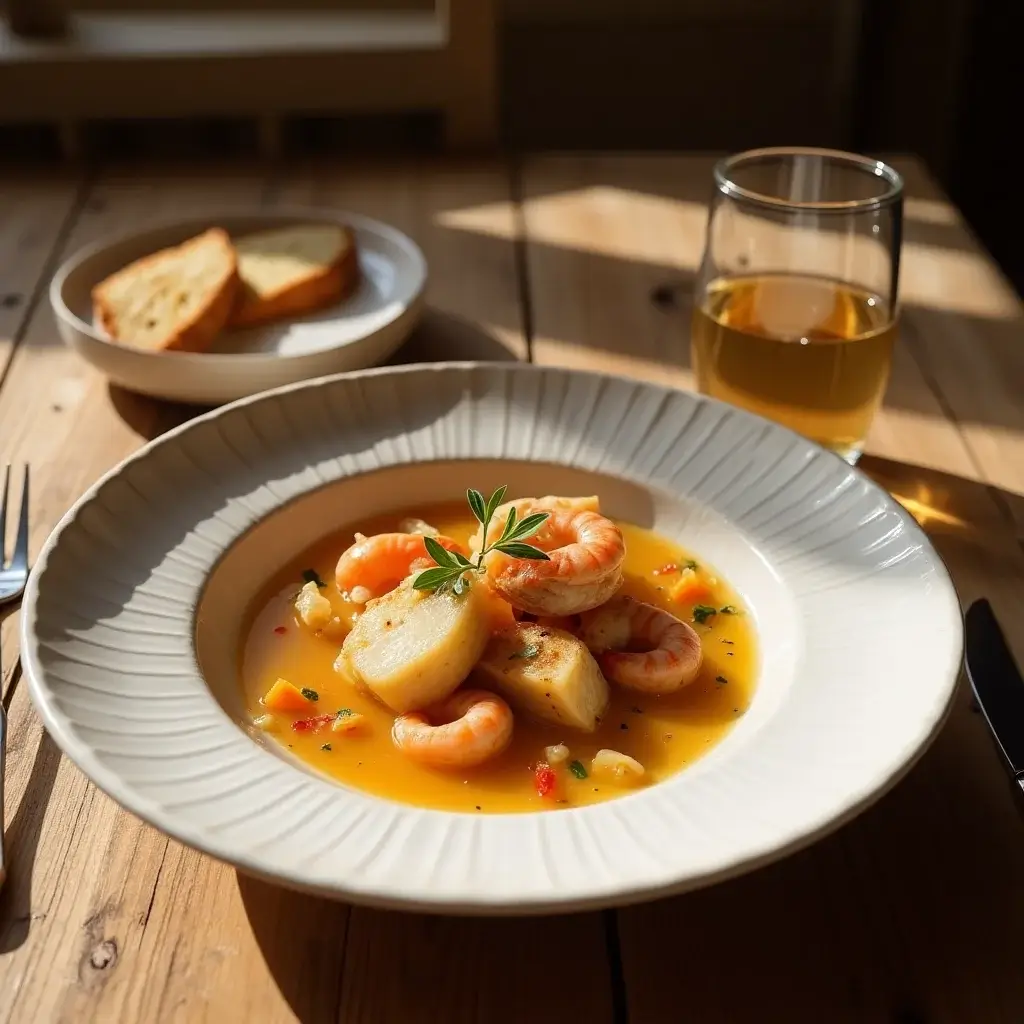
Bouillabaisse is far more than a fish stew—it’s a culinary legend born from the sun-drenched shores of Marseille. Once a humble fishermen’s dish, it has evolved into an emblem of French coastal cuisine. This modern version of bouillabaisse pays homage to the original while embracing a lighter, more refined approach suited for contemporary tastes. In this guide, we explore its history, ingredients, techniques, and plenty of chef-approved tips to help you master it at home.
🕒 Prep & Cook Time
Prep Time: 40 minutes
Cooking Time: 1 hour 15 minutes
Serves: 4
📖 A Bit of History: Origins of Bouillabaisse
Bouillabaisse dates back to Ancient Greece and the early Mediterranean fishing communities. Traditionally, it was made by Marseille’s fishermen using unsellable or bony fish like scorpionfish, gurnard, and conger eel. These were simmered into a fragrant broth infused with garlic, saffron, and olive oil—humble ingredients that delivered big flavor.
The name itself comes from the Provençal dialect: “bolhabaissa,” meaning “when it boils, lower the heat.” True to its name, the recipe hinges on slow cooking, careful layering of flavors, and often ends with toasted bread spread with a fiery garlic rouille. Today, bouillabaisse is served everywhere from rustic seaside cafés to Michelin-starred restaurants.
Fresh Ingredients for a Refined Bouillabaisse
For the broth:
- 2 onions
- 2 ripe tomatoes
- 1 leek (white part only)
- 2 shallots
- 2 garlic cloves
- 1 bulb of fennel
- 1 small celery stalk
- 1 bouquet garni (thyme, bay leaf, parsley)
- Zest of 1 untreated orange
- A pinch of saffron threads
- Extra virgin olive oil
- 1 liter of water
- 300g fish trimmings (heads, bones, skin)
For the seafood:
- 400g monkfish fillet
- 400g cod or hake fillet
- 4 fresh langoustines or large shrimp
- 4 scallops (optional, for an elegant touch)
For homemade rouille:
- 1 egg yolk
- 1 garlic clove
- 1 tsp Dijon mustard
- 1 pinch of Espelette pepper or hot paprika
- 150ml olive oil
- Salt and pepper to taste
To serve:
- Slices of toasted baguette or country bread
- Optional: grated cheese (e.g., Emmental or Parmesan)
🔧 Tools You’ll Need
- Large pot or Dutch oven
- Fine strainer or cheesecloth
- Non-stick skillet or steamer
- Whisk and mixing bowls
- Sharp kitchen knives, ladles, tongs
🔥 Step-by-Step: How to Make Modern Bouillabaisse
1. Build a rich, fragrant broth
In a large pot, heat olive oil and sauté the chopped onions, shallots, garlic, leeks, fennel, and celery over medium heat. Once softened, add diced tomatoes, fish trimmings, bouquet garni, orange zest, and saffron. Pour in the water and let everything simmer for 45 to 60 minutes.
Strain the broth through a fine sieve or cheesecloth, pressing down on the solids to extract maximum flavor. Adjust seasoning to taste and keep warm.
2. Gently cook the seafood
Cut the fish into serving-sized portions. Cook them gently in a pan with a splash of olive oil or steam them to retain moisture. Sear the langoustines and scallops briefly—about one minute per side—to keep their tenderness.
3. Whip up the homemade rouille
Crush the garlic with a pinch of salt. In a bowl, combine garlic, egg yolk, mustard, and chili powder. Slowly drizzle in olive oil while whisking to create a smooth, thick emulsion. Refrigerate until ready to serve.
4. Elegant plating
In deep plates or bowls, place the cooked fish, langoustines, and scallops. Ladle over the hot broth. Serve with toasted bread topped with a generous spoonful of rouille.
Pro Tips & Flavor Boosters
- Go local: Use fresh, local fish for the best taste and texture.
- Mix species: Add variety with rockfish, red mullet, or gurnard if available.
- Zesty twist: The orange zest brings brightness and depth to the broth.
- Creative rouille: Add a touch of turmeric or preserved lemon for an extra kick.
🍷 Wine Pairing
A dry white with Mediterranean character is ideal: try a Cassis AOC, Bandol Blanc, or a crisp Côtes de Provence. For a rosé option, opt for something elegant and structured. Avoid red wines—they’ll overpower the delicacy of the fish.
🍽️ Contemporary Variations to Explore
- Vegetarian twist: Use roasted vegetables and a seaweed broth for a meat-free version.
- Mini appetizers: Serve bouillabaisse in small glasses or jars for elegant starters.
- Deconstructed: Present broth, fish, and garnishes separately on a tasting platter.
FAQ –
Can I use frozen fish?
Yes, but thaw it slowly in the fridge to preserve texture.
How long does it keep?
The broth will stay fresh for 2-3 days in the fridge. Seafood is best served the same day.