
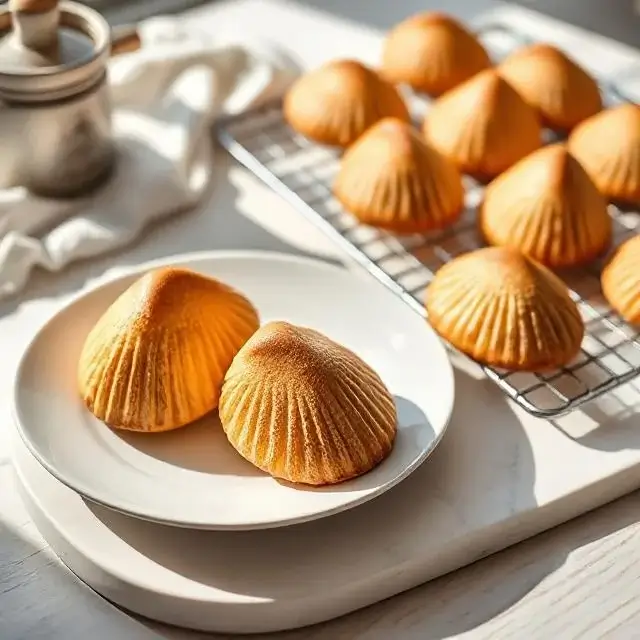
Madeleines de Commercy are much more than simple little cakes. They represent childhood memories, French tradition, and artisanal know-how. With their iconic shell shape and soft, fluffy texture, these pastries have become beloved across generations. But behind their modest appearance lies a rich history and a precise baking technique. Let’s dive into the world of this famous Lorraine specialty.
🕒 Prep and Cooking Time
Preparation: 20 minutes (the day before)
Resting Time: 24 hours
Cooking: 7 to 8 minutes
Servings: About 24 madeleines
📜 A Bit of History: The Origins of Madeleines
According to legend, madeleines are named after a young maid named Madeleine, who is said to have improvised this little cake in the 18th century for Stanislas Leszczynski, Duke of Lorraine. He was so charmed by the creation that he named it after her. It was in the town of Commercy, Lorraine, that the recipe gained its fame. Local bakers soon perfected it, making madeleines a culinary icon of the region.
Ingredients for Authentic Homemade Madeleines
- 3 whole eggs
- 150 g granulated sugar
- 150 g flour
- 1/2 packet of baking powder
- 125 g butter
- 2 tablespoons of milk
- Zest of one lemon (or seeds from one vanilla bean)
🔪 Required Equipment
- Madeleine molds (preferably metal)
- Mixing bowl
- Electric mixer or hand whisk
- Spatula
- Piping bag
- Plastic wrap
Step 1: Preparing the Batter (The Day Before)
In a large bowl, whisk the eggs and sugar until light and frothy. Add the milk and continue to mix gently. Sift the flour and baking powder together, then fold them into the mixture.
Meanwhile, melt the butter and keep it warm. Add the lemon zest or vanilla seeds to the batter for subtle aroma. Slowly pour in the warm butter while mixing gently to preserve the airy texture.
Cover the bowl with plastic wrap and refrigerate for 24 hours. This step is crucial for creating the madeleines’ signature hump.
Step 2: Baking (The Next Day)
Preheat the oven to 225°C (437°F) using the convection setting. Grease your madeleine molds generously, even if they’re nonstick.
Fill a piping bag with the batter and pipe into each mold cavity, filling about three-quarters full. Bake for 2 minutes, then turn off the oven without opening the door. Let the residual heat form the characteristic hump—this takes around 5 to 6 minutes.
If needed, turn the oven back on at 160°C (320°F) for a brief moment to add golden color. Remove and unmold the madeleines while still warm.
Pro Tips
- Don’t skip the rest: The 24-hour rest is vital for that fluffy texture and hump.
- Avoid overbaking: Madeleines should remain moist inside. Remove them as soon as the edges turn golden.
- Customize the aroma: Swap lemon for orange blossom water or tonka bean for a twist.
Creative Variations
- Filled center: Place a small dollop of jam or chocolate spread inside each mold before baking.
- Savory version: Reduce sugar, add grated cheese, herbs, and a pinch of salt for an appetizer-style madeleine.
- Gluten-free: Use rice flour and cornstarch for a lighter, gluten-free option.
🍵 How to Enjoy Madeleines
Traditionally, madeleines are enjoyed as a snack with black tea or hot chocolate. They’re also great for breakfast or served alongside a coffee.
For more creative options, use madeleines as a base for layered desserts like tiramisu, trifles, or crumble them over ice cream.
FAQ –
Why didn’t my madeleines form a hump?
Either the batter didn’t rest long enough, or the oven wasn’t hot enough initially.
Can I freeze the batter or the baked madeleines?
Yes! Freeze the raw batter in a piping bag or store the baked goods in an airtight container.